
How Do I Evaluate a Senior Apartment Before Signing a Lease?
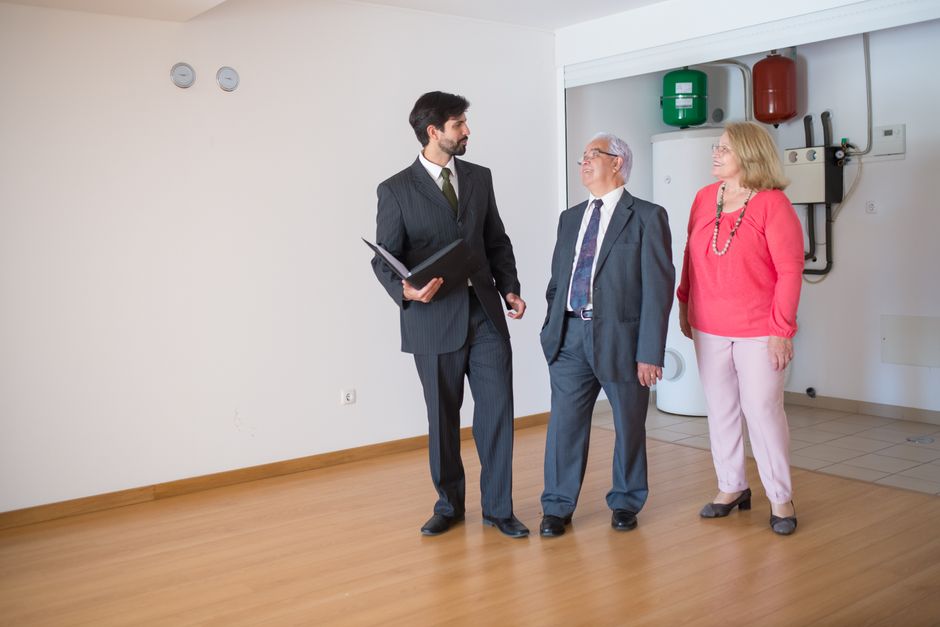
Evaluate a senior apartment by touring the route from parking or entry to the bedroom, bathroom, kitchen, and exits; checking fall-prevention details and emergency procedures; and asking what modifications and support the property can accommodate. An age-restricted label alone does not prove the unit has grab bars, step-free access, elevators, or care services, so get the building’s actual features and policies in writing before signing.
Use a simple rule: inspect the places you will use when tired, carrying groceries, or moving around at night. A bright model unit can create false confidence. The useful question is whether the apartment works across an ordinary day without forcing a risky workaround.
Do senior apartments have grab bars, elevators, and step-free entrances?
Some do, but a senior-apartment label does not guarantee any of those features. According to the U.S. Department of Housing and Urban Development, 62+ and 55+ designations concern age eligibility and do not remove protections against disability discrimination. Age restriction is not an accessibility specification. It is a leasing rule.
Building design matters more. A joint HUD and Department of Justice statement explains that Fair Housing Act design-and-construction rules apply to covered multifamily dwellings first occupied after the federal cutoff. In buildings with four or more units and an elevator, the rules cover all units and common areas; in qualifying buildings without an elevator, they cover ground-floor units and common areas. Covered units include an accessible route into and through the unit, accessible controls, reinforced bathroom walls for later grab-bar installation, and usable kitchens and bathrooms.
That standard still does not mean a particular bathroom already has grab bars or that every route is step-free. Ask for a tour that starts outside the building, not at the leasing desk. The entrance route, door thresholds, mailbox area, laundry room, parking path, elevator or stairs, and trash route all carry part of the answer.
| Tour point | What to verify | A direct question to ask |
|---|---|---|
| Arrival route | A continuous route from parking or drop-off to the apartment entrance | “Can we walk the exact route I would use from arrival to this unit?” |
| Building access | Whether the unit is on a step-free route and whether an elevator serves it | “Is this route step-free from entrance to unit, including every required doorway?” |
| Bathroom | Grab bars now, or wall reinforcement and permission to add them later | “Are the bathroom walls reinforced for grab bars, and what is the request process?” |
| Kitchen | Clear passage and storage that can be reached without climbing | “Which cabinets and work areas can be adapted if reach becomes limited?” |
This is the route test: do not ask whether the property is “senior-friendly.” Ask the property to show the route and name the feature. Specific questions reduce the cognitive load for everyone and produce answers you can compare across apartments.
What emergency response features should be available in a senior apartment?
An apartment should have a clear emergency plan, reliable ways to call for help, and a known process for urgent maintenance; a personal emergency-response system can add another layer, but it is not the same as on-site care. The National Institute on Aging describes systems with a necklace or bracelet button that can alert 911, while noting that they charge a fee and are usually not covered by insurance.
Start with the overnight reality, not the sales brochure. The National Institute on Aging recommends reachable light switches near the bed, night-lights, and a phone or flashlight nearby for nighttime safety. Ask whether hallways, entrances, and the route to trash or parking are illuminated after dark. Then ask the property manager where residents receive emergency notices and who answers an after-hours maintenance call.
Use the response-map question: “If there is a fall, a power outage, a locked-out resident, or an urgent leak after office hours, what happens first, who responds, and how is the resident contacted?” The property may not provide personal care, and it should not imply that it does. What matters is an accurate account of the building’s procedures, controlled-entry practices, staff coverage, and maintenance escalation.
Separate housing safety from care services. The National Institute on Aging says assisted living is for people who need help with daily care but not the level of help provided by a nursing home. It also notes that assisted-living arrangements vary by facility and state, and that residents generally pay more when they need extra services or specialized care. A standard senior apartment may be the better fit when independent housing is the need; it should not be presented as assisted living simply because residents are older.
How can I tell whether an apartment will still work if my mobility changes?
You can tell by testing the apartment against daily tasks, asking which changes are permitted, and separating future accessibility needs from services you do not currently need. The Consumer Financial Protection Bureau advises assessing mobility needs such as getting out of bed, reaching the bathroom, and using stairs when a health change affects housing decisions. Those are not abstract categories. They are the tour agenda.
Run a room-by-room check. The Centers for Disease Control and Prevention recommends checking for broken or uneven steps, lighting and switches at both the top and bottom of stairs, and secure handrails on both sides. It also recommends clear walking paths, secured or removed throw rugs, and cords routed along walls. In the bathroom, the CDC recommends nonslip mats or self-stick strips and grab bars next to and inside the tub and next to the toilet.
For the kitchen, the National Institute on Aging recommends keeping commonly used pots and utensils within easy reach and cleaning spills immediately. The CDC adds a bluntly practical point: frequently used items belong on lower shelves, around waist height, and a chair is not a substitute for a step stool. Small layout choices determine whether a unit creates repeatable friction.
Then ask about modifications before they are needed. According to HUD and the Department of Justice, a housing provider generally must permit a reasonable disability-related structural modification needed for a renter to fully enjoy a dwelling. Examples that are typically reasonable include grab bars, lower kitchen cabinets, wider doorways, a ramp, and changes to a walkway. In a private rental, the tenant generally pays for a reasonable modification, and the landlord may reasonably require restoration of an interior modification at move-out, excluding ordinary wear and tear.
Weak question: “Can you accommodate me if something changes?” Strong question: “If I need grab bars, a ramp, or a doorway change, who receives the request, what documentation is needed, who approves the work, and what restoration terms would apply?” Put the answer in your lease file with the floor plan and property contact details.
Finish with a support inventory. The CFPB distinguishes medical at-home care, such as skilled nursing and medication assistance, from nonmedical help such as cleaning, cooking, laundry, and help with daily living. That distinction prevents an expensive category error: paying for a care setting when the immediate need is an adaptable apartment and occasional nonmedical support, or choosing ordinary housing when daily personal or medical support is becoming necessary.
If a move is part of a broader plan that includes travel, keep those decisions separate. An apartment tour answers home-access questions; trip planning needs its own accessibility check, just as a traveler might use this guide to choosing a September 2026 cruise itinerary for a different set of logistics.
Frequently Asked Questions
Are 62+ apartments required to be accessible?
No. HUD explains that qualifying 62+ housing is housing intended for and solely occupied by people age 62 or older; that designation does not itself guarantee grab bars, elevators, or step-free access. Federal Fair Housing Act design-and-construction requirements can apply to covered multifamily dwellings, depending on the building type and when it was first occupied.
What should I inspect in the bathroom and kitchen during a senior apartment tour?
In the bathroom, inspect the walking surface, tub or shower, toilet area, lighting, and whether grab bars are present or could be added. In the kitchen, check whether commonly used items can be stored within easy reach, whether spills can be cleaned promptly, and whether the layout leaves a clear route without needing a chair as a step stool.
Can I install accessibility equipment in a rental apartment?
A renter may request a reasonable disability-related structural modification at any time during the tenancy under the Fair Housing Act. HUD and DOJ list bathroom grab bars, widened doorways, lowered cabinets, ramps, and altered walkways as examples that are typically reasonable; in a private rental, the tenant generally pays, and restoration of an interior change may be required at move-out when reasonable.
Before signing, run the route test, ask the response-map question, and save the modification policy. That is the useful homework: leave the tour with evidence, not a reassuring impression.
Sources
- U.S. Department of Housing and Urban Development and U.S. Department of Justice: Fair Housing Act Design and Construction Requirements
- U.S. Department of Housing and U.S. Department of Justice: Reasonable Modifications Under the Fair Housing Act
- Centers for Disease Control and Prevention: Check for Safety
- National Institute on Aging: Preventing Falls at Home
- National Institute on Aging: Assisted Living and Nursing Homes
- Consumer Financial Protection Bureau: Managing Someone Else’s Money During a Change in Health
- U.S. Department of Housing and Urban Development: Fair Housing for Older Persons
Disclaimer: This article is for general information only and is not financial advice. It does not take your personal circumstances into account, and past performance does not predict future results. Speak to a licensed financial professional before making money decisions.